Schools
How a millionaire bonanza farmer was swindled out of $25,000, then died on the Titanic
By Tommy Nguyen
Advertisement · Why this ad?
Jake Thompson has a degree in Journalism from the University of North Dakota and has spent the last three years reporting for business publications in the region. He specializes in local finance, investment opportunities, and economic development.
More from Jake →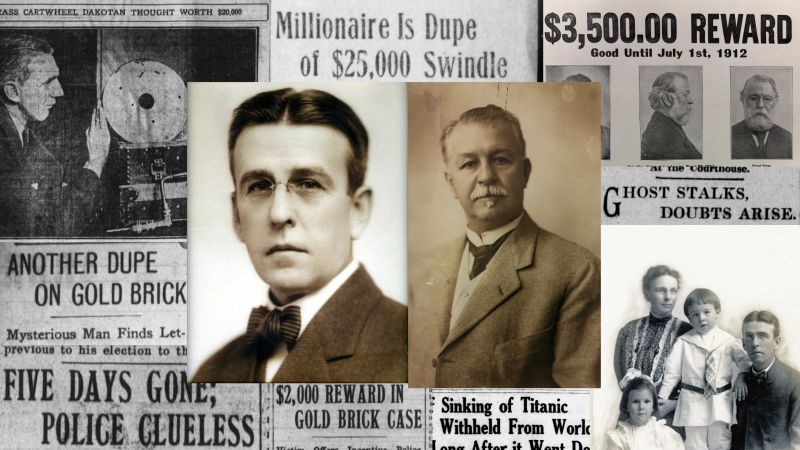
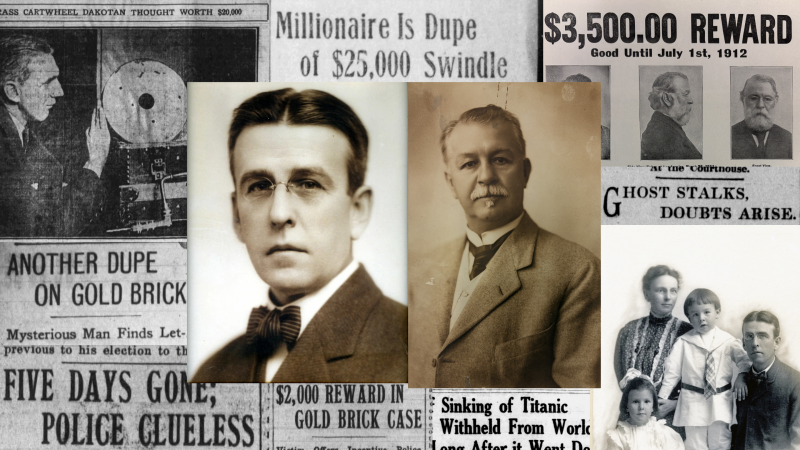
On a chilly October evening in 1909, Herbert F. Chaffee sat in his Amenia home, clutching a glass of water and a small vial filled with what he believed was a secret to uncovering truth—an alleged "truth serum" that could reveal the authenticity of gold. This moment was not just a petty scam; it was part of a larger web of deception that would ripple through the lives of many in North Dakota and beyond, culminating in tragedy and mystery that still captivates local historians today.
Amenia, a small farming community nestled in the fertile plains of North Dakota, was typical of the burgeoning agricultural towns of the early 20th century. The region was experiencing rapid growth due to the expansion of the Northern Pacific Railway, which brought settlers, commerce, and new opportunities. Herbert F. Chaffee, a bonanza farmer, was among the wealthier residents, known for his large landholdings and progressive farming techniques. His reputation as an upstanding citizen made him an ideal target for con artists seeking to exploit the trust of local leaders.
Chaffee’s family had deep roots in the region. His ancestors had arrived in North Dakota during the homesteading boom of the late 1800s, staking claims and building the community’s infrastructure. Herbert himself was well regarded, often participating in local events, supporting schools, and contributing to community development. His social standing was a testament to his success and integrity—until the day he was swindled out of $25,000.
The con began with a stranger claiming to be John Armstrong, a miner from Mexico. This man was described as a heavyset individual in his 50s, with sandy hair and a rough, homespun appearance. Armstrong’s story was that he owned a gold mine in “old Mexico,” which was in dire need of investors to clear liens and develop the property. He said he was seeking his uncle, also named Chaffee, and had come to North Dakota to find him.
What made the scam convincing was Armstrong’s detailed account of his supposed gold mine, including two ingots of gold stored in trunks in Minneapolis. He claimed these ingots were worth around $40,000—a staggering sum at the time. To add credibility, Armstrong brought out what appeared to be gold bricks, which he said were from his mine, and even arranged for a local assayer to test the metal. The assayer’s report confirmed the gold’s purity, sealing the deal in the eyes of Herbert and his son Eben.
The scheme was classic, yet effective. Armstrong’s proposal was that he would exchange the gold discs for Herbert’s $25,000 in liens—an offer that seemed too good to be true. The farmer, eager to secure his investments and perhaps intrigued by the prospect of quick wealth, agreed. The transaction took place at a Minneapolis motel, where Armstrong produced the gold bricks under dim gaslight, claiming they were genuine. The local assayer’s endorsement sealed the deal, and Herbert handed over the money in crisp, one-thousand-dollar bills.
However, suspicions soon arose. The gold bricks were examined more closely, and it was discovered that they were not gold at all but brass. The beaker test with nitric acid, which was supposed to turn blue if the metal was brass, confirmed the deception. The swindle had succeeded, and the con artist vanished into the night, leaving Herbert and Eben with worthless brass instead of gold.
The story of the swindle quickly made headlines across Minnesota and North Dakota. The local newspapers, eager to report on the scandal, described Herbert as a “gentleman farmer” who had been duped by a smooth-talking con artist. The incident resonated with the community, where trust and reputation were highly valued. Herbert’s embarrassment was palpable, but he was also determined to seek justice.
In the days that followed, the police and private investigators launched a hunt for Armstrong. The case drew widespread attention, with over 50 people visiting the police station to see the brass discs and hear updates. The media dubbed this case one of the most sensational swindles of the era, comparing it to other famous scams that had rocked the nation.
Herbert’s family members recalled his reaction as one of quiet disappointment but resolve. His youngest son, Lester, later recounted in a 1974 interview that his father would often say, “Goodness gracious,” when recalling the incident, and that he was both humiliated and determined to prevent others from falling prey to similar schemes. Despite the setback, Herbert remained active in community affairs, though he carried the scars of the scam for the rest of his life.
The police and private detectives worked tirelessly to track down John Armstrong. Their efforts took them across the Midwest, from Minneapolis to Chicago, and eventually to Los Angeles. The investigators obtained a photograph of a man matching Armstrong’s description and believed they had a lead when they identified a suspect named Cornelius W. Caddagan, who was also involved in similar schemes.
In April 1911, authorities in Los Angeles arrested Caddagan, who was then being arraigned on unrelated charges. The Chaffee family traveled to California, confident that their man had finally been caught. However, the case took a tragic turn when Caddagan’s body was found floating in San Pedro Harbor, heavily weighted with iron castings. His wife, Eudora, claimed he was innocent and that police had driven him to despair, but authorities remained skeptical about the identification.
Despite Eudora’s protests, the police noted discrepancies in the body’s height and other features. The body’s resemblance to Caddagan was inconclusive, and the case was shrouded in mystery. The Caddagan case became a symbol of the murky world of early 20th-century crime, where identities could be fabricated and bodies manipulated.
The Chaffee family was relentless in their pursuit of justice. They filed lawsuits against Caddagan and his wife, claiming that the death was a cover-up and that the swindle had caused irreparable harm to their reputation and finances. The family also posted substantial rewards for information leading to the arrest of Armstrong and others involved.
Despite their efforts, the trail grew cold, and the case faded from headlines as other scandals took center stage. Yet, the story lingered in local memory as an example of the dangers of trusting strangers and the importance of vigilance in financial dealings.
What makes this story even more poignant is the tragic fate of Herbert F. Chaffee. In 1912, just three years after the swindle, Herbert boarded the RMS Titanic, which was making its maiden voyage from Southampton to New York. Like many others, he believed in the promise of a new beginning in America, unaware that this journey would end in disaster.
Herbert’s death on the Titanic marked the end of a life that had seen both triumph and tragedy. His story was later recounted in local histories and remembered as a cautionary tale about greed, deception, and the unpredictable turns of fate that can strike even the most reputable individuals.
The story of Herbert F. Chaffee is more than a tale of scams and tragedy; it is a reflection of the resilience and complexity of the North Dakota community during a period of rapid change. It highlights the importance of community vigilance, the dangers of unchecked greed, and the enduring human capacity for both deception and compassion.
Today, Fargo and the surrounding region remember these stories through local museums, historical societies, and oral histories passed down through generations. They serve as lessons for modern-day residents about the importance of due diligence, community support, and the need to protect oneself from fraud in an increasingly complex world.
While the cases of Armstrong and Caddagan remain unsolved in a definitive sense, the story of Herbert F. Chaffee continues to inspire local historians and community members. Efforts are underway to preserve these stories through exhibits at the North Dakota Heritage Center and other regional museums. Researchers are also examining the broader context of early 20th-century scams and their impact on frontier communities.
In addition, local law enforcement agencies have increased their focus on financial crimes, learning from past cases like this one. Community education programs now emphasize the importance of skepticism and verification, especially when dealing with strangers offering seemingly extraordinary opportunities.
As Fargo and North Dakota continue to grow, the legacy of Herbert F. Chaffee and the lessons from his tragic story serve as a reminder of the importance of vigilance, integrity, and community resilience. The story of the gold brick swindle and its aftermath remains a compelling chapter in the history of this region, illustrating the enduring human themes of trust, betrayal, and hope amidst adversity.
For those interested in exploring this story further, local archives such as the North Dakota State University Archives and the Fargo-Moorhead Historical Society offer extensive collections of documents, photographs, and oral histories. Community events and lectures are regularly held to educate residents about regional history and the lessons learned from past scams.
Furthermore, schools across North Dakota incorporate these stories into their history curricula, emphasizing critical thinking and the importance of community vigilance. The story of Herbert F. Chaffee continues to resonate today, reminding us all of the fragile line between trust and deception—and the enduring strength of community in the face of adversity.
By Tommy Nguyen

By Tommy Nguyen

By Carlos Martinez

By Tommy Anderson